Every workplace should be prepared to deal with accidents and medical emergencies. One of the simplest but most important steps employers can take is providing a well-stocked first aid box. Whether it’s a small office, a retail shop, a warehouse, or a construction site, having the right first aid supplies readily available can help provide immediate care until professional medical assistance arrives.
Many employers ask, “What should a first aid box contain at work?” The exact contents will depend on the workplace risk assessment, the number of employees, and the nature of the work being carried out. However, every workplace should ensure that first aid supplies are appropriate, accessible, and regularly maintained.
Why Is a Workplace First Aid Box Important?
A workplace first aid box allows trained first aiders to respond quickly during emergencies.
Having suitable supplies available helps:
- Treat minor injuries immediately
- Reduce the severity of some injuries
- Support workplace safety
- Assist until emergency services arrive
- Improve emergency preparedness
- Protect employees and visitors
A well-maintained first aid box is an essential part of any workplace health and safety plan.
Common Items Found in a Workplace First Aid Box
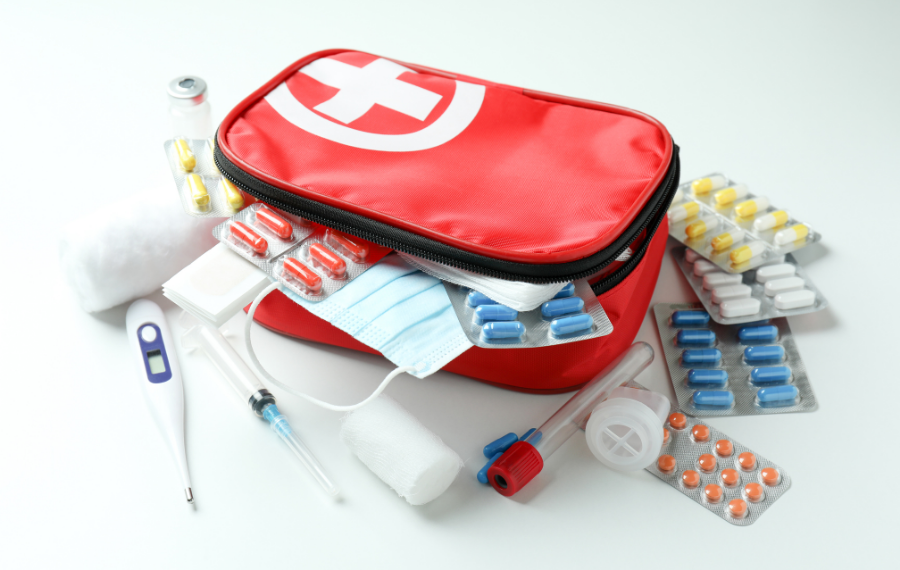
The exact contents may vary depending on the workplace, but a typical first aid box often includes:
- Sterile adhesive dressings (plasters)
- Sterile wound dressings
- Triangular bandages
- Roller bandages
- Sterile eye dressings
- Disposable gloves
- Cleansing wipes
- Safety pins
- Adhesive tape
- Scissors
- Burn dressings (where appropriate)
- Foil emergency blanket
- Resuscitation face shield or pocket mask
These supplies help first aiders manage a variety of common workplace injuries.
Should Every Workplace Have the Same First Aid Kit?
No.
The contents of a first aid box should reflect the risks present within the workplace.
For example:
Low-Risk Workplaces
Examples include:
- Offices
- Small retail stores
- Libraries
- Reception areas
These workplaces may require a standard first aid kit containing basic supplies.
Higher-Risk Workplaces
Examples include:
- Construction sites
- Warehouses
- Factories
- Engineering workshops
- Manufacturing facilities
These workplaces may require additional dressings, burn treatments, eye wash solutions, or specialist equipment depending on the risks identified.
Where Should a First Aid Box Be Kept?
A first aid box should always be:
- Easy to find
- Clearly labelled
- Accessible during working hours
- Protected from damage
- Stored in a clean, dry location
Large workplaces may require several first aid boxes positioned throughout the building to ensure quick access during emergencies.
Who Is Responsible for Checking the First Aid Box?
Employers should appoint a responsible person to inspect first aid supplies regularly.
Checks should ensure:
- Items are within their expiry dates
- Used supplies are replaced promptly
- Packaging remains sealed and undamaged
- The kit remains fully stocked
- Additional supplies are added when necessary
Regular inspections help ensure the kit is always ready for use.
How Often Should a First Aid Box Be Checked?
There is no fixed inspection schedule suitable for every workplace.
However, employers should inspect first aid kits:
- Regularly
- After every use
- Following workplace incidents
- Before busy periods
- Whenever supplies are running low
Higher-risk workplaces often require more frequent inspections.
Should Employees Know Where the First Aid Box Is?
Absolutely.
Employees should know:
- The location of first aid boxes
- Who the workplace first aiders are
- How to report an emergency
- How to access emergency assistance
Clear signage and regular safety briefings help ensure everyone knows what to do during an emergency.
Supporting Workplace Safety
A first aid box is only one part of effective workplace first aid.
Employers should also provide:
- Trained first aiders
- Emergency procedures
- Appropriate first aid training
- Accident reporting procedures
- Regular safety reviews
Together, these measures help create a safer working environment.
Common Mistakes to Avoid
Some businesses unintentionally reduce the effectiveness of their workplace first aid arrangements.
Common mistakes include:
- Allowing supplies to expire
- Forgetting to replace used items
- Locking the first aid box away
- Failing to review kit contents
- Keeping only one kit in a large workplace
- Not informing employees where supplies are located
Regular maintenance helps prevent these issues.
Conclusion
If you’ve been asking “What should a first aid box contain at work?”, the answer depends on your workplace risk assessment and the type of work being carried out. Every workplace should ensure that first aid supplies are suitable, easily accessible, and regularly checked so trained first aiders can respond effectively during emergencies.
A properly maintained first aid box is a simple but essential part of creating a safer workplace for employees, visitors, and contractors.
Frequently Asked Questions
What should every workplace first aid box contain?
Most workplace first aid boxes include dressings, bandages, plasters, gloves, eye dressings, cleansing wipes, scissors, adhesive tape, and other essential emergency supplies.
Does every workplace need the same first aid kit?
No. The contents should be based on the workplace first aid needs assessment and the risks involved.
How often should a first aid box be checked?
Employers should inspect first aid kits regularly, replace used items immediately, and ensure supplies remain within their expiry dates.
Where should a workplace first aid box be stored?
It should be kept in a clearly marked, easily accessible location where employees can quickly find it during an emergency.
Who is responsible for maintaining the first aid box?
Employers should appoint a responsible person to regularly inspect, restock, and maintain workplace first aid supplies.
Prepare Your Workplace with High Aims Training
Having a fully stocked first aid box is only one part of workplace safety. At High Aims Training, we provide accredited Emergency First Aid at Work (EFAW) and First Aid at Work (FAW) courses to help individuals and businesses develop the practical skills needed to respond confidently during emergencies.
Our experienced trainers deliver engaging, hands-on learning that supports workplace health and safety while helping employers create safer working environments.
Book your First Aid training with High Aims Training today and ensure your workplace is prepared for emergencies.