Emergencies rarely happen with warning. One moment, everything in the workplace is running normally, and the next, someone may need urgent medical help. From slips and falls to choking incidents, burns, cardiac arrest, or sudden illness, the ability to respond quickly can make a huge difference before emergency services arrive.
That is why First Aid at Work training has become such an important part of modern workplace safety in the UK. Businesses across industries are recognising that trained first aiders do far more than meet legal requirements — they help create safer, more prepared workplaces where employees feel protected and supported.
At High Aims Training, we regularly hear from learners who say the skills they gained during first aid training helped them long after the course finished. Many have used their knowledge outside work while helping family members, friends, customers, or even strangers in public emergencies.
A First Aid at Work course is not simply about passing an assessment or receiving a certificate. It teaches practical, real-world skills that stay with you for life. Here are five of the most valuable lessons learners take away from workplace first aid training and why they matter in everyday situations.
Learning How to Take Control During an Emergency
One of the biggest challenges during an emergency is panic. In stressful situations, people often freeze or become overwhelmed because they are unsure what to do first. Workplace first aid training teaches learners how to stay calm, think clearly, and take control of the situation safely.
Before providing treatment, a trained first aider learns how to assess the scene, identify dangers, and protect both themselves and the casualty. This calm and structured response helps reduce confusion and allows emergency care to begin faster.
During First Aid at Work training, learners develop the ability to:
- Assess emergency situations quickly
- Identify risks and hazards nearby
- Contact emergency services confidently
- Communicate clearly under pressure
- Support casualties until help arrives
- Keep bystanders calm and organised
These skills become valuable not only in workplaces but also during road accidents, public emergencies, sporting events, and situations at home.
Many learners say this confidence-building aspect of first aid training changes the way they react to emergencies permanently.
Understanding DRABC: The First Aid System That Saves Lives
One of the most important techniques taught during workplace first aid training is the DRABC assessment process. This structured method helps first aiders decide what to do first during a medical emergency.
DRABC stands for:
- Danger
- Response
- Airway
- Breathing
- Circulation
Rather than reacting emotionally, DRABC gives first aiders a reliable system to follow step by step. It ensures that life-threatening problems are recognised quickly and managed in the correct order.
For example, if someone collapses unexpectedly at work, DRABC helps a first aider assess whether the environment is safe, whether the casualty is responsive, whether they are breathing properly, and whether emergency CPR is required.
This method is widely used across workplace first aid, emergency response, and healthcare environments because it creates a calm and organised approach during high-pressure situations.
At High Aims Training, learners practise DRABC repeatedly through realistic emergency scenarios so they feel comfortable applying it naturally in real-life emergencies.
CPR and AED Training: The Skill People Remember Most
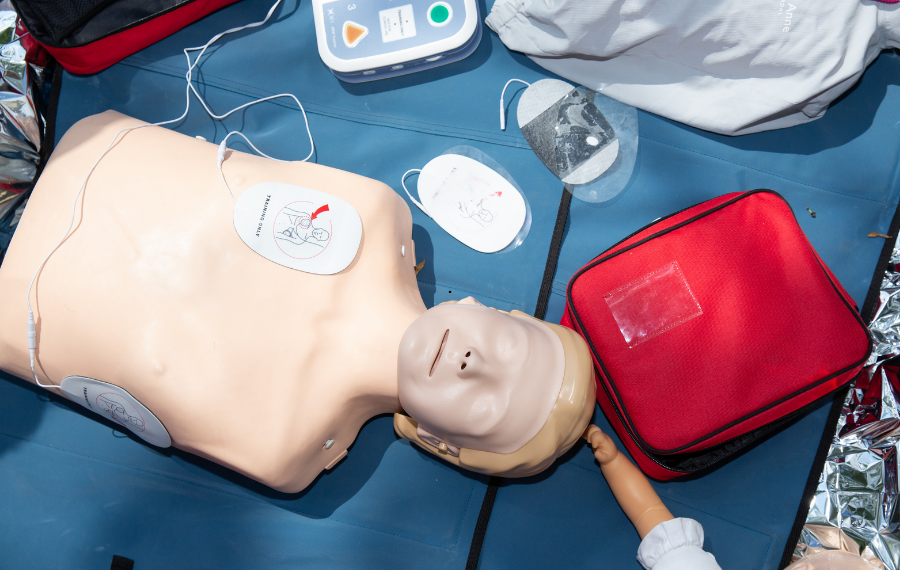
Among all workplace first aid skills, CPR training is often the most memorable. Learners quickly realise that knowing how to perform CPR correctly could one day help save a person’s life.
Cardiac arrest can happen anywhere — in offices, gyms, shopping centres, construction sites, airports, schools, or even at home. Without immediate action, survival chances drop rapidly every minute.
This is why CPR and AED training forms a major part of both Emergency First Aid at Work and full First Aid at Work qualifications.
Learners are taught how to:
- Recognise cardiac arrest symptoms
- Deliver effective chest compressions
- Perform rescue breaths safely
- Use an Automated External Defibrillator (AED)
- Follow voice-guided AED instructions confidently
- Continue lifesaving treatment until paramedics arrive
Many people are initially nervous about CPR training, but practical sessions help build confidence very quickly. By the end of the course, learners often realise that taking action is far better than doing nothing during a cardiac emergency.
These skills are not limited to the workplace. They are valuable life skills that can help protect loved ones, colleagues, and members of the public in unexpected situations.
Managing Bleeding, Burns, and Workplace Injuries
Accidents involving cuts, burns, bleeding, and physical injuries are common across many industries, especially in construction, manufacturing, catering, logistics, and warehousing environments.
One of the key strengths of First Aid at Work training is that it prepares learners to respond calmly and correctly when these injuries happen.
Practical first aid skills include:
- Treating cuts and open wounds
- Applying dressings and bandages correctly
- Managing severe bleeding safely
- Supporting injured limbs and fractures
- Treating burns and scalds properly
- Reducing infection risks during treatment
Learners also understand when an injury can be treated on-site and when emergency medical attention is urgently required.
What makes this training especially valuable is the practical confidence learners develop. Rather than panicking when someone is injured, trained first aiders know how to react quickly and provide reassurance while delivering treatment.
Helping Unconscious Casualties and People in Shock
Not every emergency involves visible injuries. Sometimes a casualty may collapse suddenly or become unresponsive due to illness, shock, allergic reactions, seizures, or other medical emergencies.
These situations can feel extremely stressful without proper training. Workplace first aid courses teach learners how to recognise serious warning signs and provide safe support while waiting for professional help.
Learners discover how to:
- Recognise signs of shock quickly
- Monitor breathing and responsiveness
- Place casualties in the recovery position
- Keep casualties warm and comfortable
- Reassure people during distressing situations
- Observe changes in a casualty’s condition
One of the most overlooked parts of first aid is communication. Calm reassurance from a trained first aider can help reduce panic and provide emotional comfort during frightening emergencies.
This human side of first aid is something many learners remember long after the course ends.
Choking Emergencies: Fast Action Saves Lives
Choking emergencies can become life-threatening within minutes. Knowing how to react quickly and correctly is one of the most practical skills taught during workplace first aid training.
Learners practise how to:
- Identify partial and complete choking
- Deliver effective back blows
- Perform abdominal thrusts safely
- Adapt treatment for different casualties
- Respond if a casualty becomes unconscious
- Begin CPR if breathing stops
These situations happen frequently in restaurants, schools, offices, homes, and public places, making choking treatment one of the most useful everyday first aid skills.
Recognising Heart Attacks and Strokes Early
Modern first aid training also focuses heavily on recognising medical emergencies early because fast action often improves survival and recovery outcomes.
Learners are trained to recognise:
- Chest pain and heart attack symptoms
- Stroke warning signs using FAST
- Breathing difficulties
- Sudden weakness or confusion
- Changes in speech or responsiveness
Early recognition allows emergency services to begin treatment faster, which can significantly reduce long-term complications.
These are skills that can help not only colleagues at work but also friends, relatives, and members of the public during everyday life.
Mental Health Awareness in the Workplace
Workplace wellbeing now extends beyond physical injuries. Stress, anxiety, pressure, and burnout are becoming increasingly common in modern working environments.
Many employers are beginning to recognise the importance of supporting mental wellbeing alongside physical safety. As a result, workplace first aid awareness often includes recognising emotional distress and understanding how to support colleagues appropriately.
Learners may explore how to:
- Recognise signs of stress and anxiety
- Listen supportively without judgement
- Encourage open conversations
- Direct colleagues toward professional support services
- Promote a healthier workplace culture
This broader approach helps businesses create safer and more supportive working environments overall.
Why First Aid Skills Stay With You for Life
Unlike many workplace qualifications, first aid training has real-life value long after the course is completed. The knowledge gained can be used anywhere — at work, at home, while travelling, during sports activities, or in public emergencies.
Many people never expect to use their first aid skills, yet when emergencies happen, they are often grateful they received proper training beforehand.
The ability to remain calm, think clearly, and take action confidently during emergencies is something that benefits every part of life.
Why Choose High Aims Training?
At High Aims Training, we provide practical and engaging First Aid at Work courses designed around real-life workplace situations. Our experienced trainers focus on helping learners build confidence, not just pass assessments.
Our workplace first aid courses include:
- Emergency First Aid at Work (EFAW)
- 3-Day First Aid at Work (FAW)
- First Aid at Work Requalification
- Annual Refresher Training
- On-site workplace training for businesses
- Group bookings across multiple industries
We work with businesses, schools, warehouses, construction companies, offices, hospitality organisations, and individuals throughout the UK.
Book Your First Aid at Work Course Today
Learning first aid is one of the most valuable skills anyone can gain. The confidence to act during an emergency could one day help protect a colleague, customer, family member, or stranger when every second matters.
At High Aims Training, our accredited workplace first aid courses combine practical learning, realistic scenarios, and expert instruction to help learners feel fully prepared for real emergencies.
Book your First Aid at Work course with High Aims Training today and gain life-saving skills that can stay with you for years to come.