If you’re planning to become a qualified first aider, one of the first questions you’ll probably ask is, “How long is a first aid course?” The answer depends on the type of course you choose, your workplace requirements, and the level of training you need.
In the UK, first aid courses range from one-day introductory courses to three-day comprehensive workplace qualifications. Each course is designed to equip learners with the knowledge and practical skills required to deal with medical emergencies confidently.
Whether you’re an employee, employer, construction worker, teacher, or business owner, understanding the different course options will help you choose the right training.
Why Does Course Length Vary?
Not every workplace faces the same level of risk. A small office usually requires different first aid arrangements than a construction site or manufacturing facility.
Because of this, first aid courses are designed to match different workplace needs.
The duration of a course depends on:
- The level of workplace risk
- The amount of practical training required
- The topics covered
- The responsibilities of the designated first aider
- The qualification being achieved
Higher-risk workplaces generally require more in-depth training.
Emergency First Aid at Work (EFAW)
The Emergency First Aid at Work (EFAW) course is one of the most popular workplace first aid qualifications.
Course Duration
- 1 Day
- Usually around 6–7 hours of learning, excluding breaks.
This course is suitable for:
- Offices
- Retail businesses
- Small workplaces
- Hospitality settings
- Lower-risk environments
Learners are introduced to essential emergency first aid skills that can help save lives before emergency services arrive.
Typical topics include:
- CPR
- Using an AED
- Choking
- Severe bleeding
- Shock
- Unconscious casualties
- Incident reporting
First Aid at Work (FAW)
The First Aid at Work (FAW) course provides more comprehensive training.
Course Duration
- 3 Days
- Usually completed over three consecutive days or spread across several weeks.
This qualification is recommended for:
- Construction sites
- Warehouses
- Manufacturing facilities
- Engineering companies
- Higher-risk workplaces
The course covers everything included in EFAW, together with additional topics such as:
- Fractures
- Head injuries
- Spinal injuries
- Burns
- Eye injuries
- Poisoning
- Asthma
- Diabetes
- Heart attacks
- Stroke
- Seizures
The extra training prepares first aiders to deal with a wider variety of workplace incidents.
Annual Refresher Training
Although workplace first aid certificates remain valid for three years, many employers encourage staff to complete annual refresher training.
Refresher sessions usually take:
- Half a day
- Or approximately 3 hours
These sessions help learners:
- Refresh CPR skills
- Practise emergency procedures
- Improve confidence
- Stay up to date with current first aid guidance
Can You Complete a First Aid Course Online?
Some providers offer online learning for certain theoretical elements of first aid training.
However, workplace first aid qualifications generally require practical, face-to-face assessment because learners must demonstrate life-saving skills such as:
- CPR
- Recovery position
- Bleeding control
- AED use
- Choking treatment
Practical assessment ensures learners can perform these techniques safely and correctly.
What Happens During the Course?
A first aid course combines classroom learning with practical exercises.
During training you can expect to:
- Learn emergency procedures
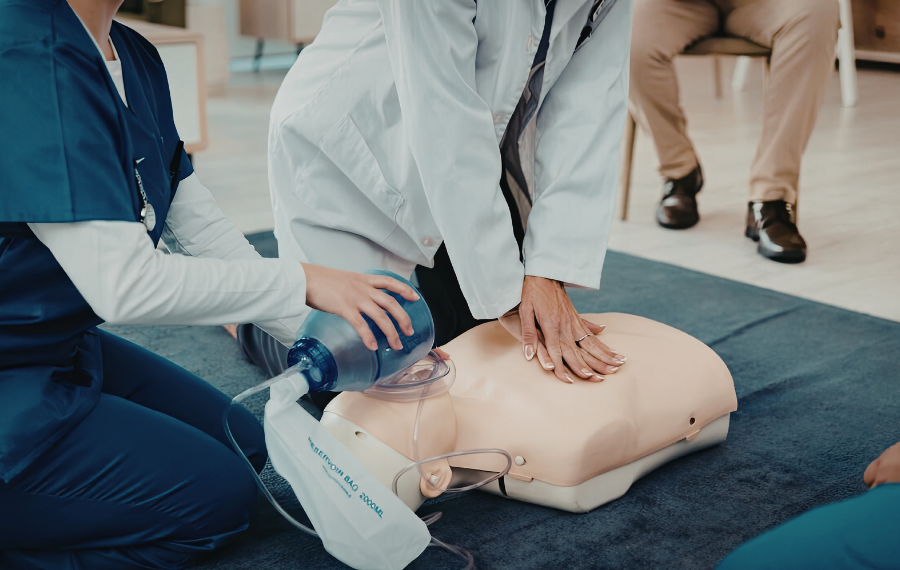
- Practise CPR on training manikins
- Use a training AED
- Treat simulated injuries
- Work through realistic emergency scenarios
- Complete practical assessments
- Ask questions and receive guidance from experienced instructors
The hands-on nature of the course helps learners build confidence before facing real-life emergencies.
Who Should Attend a First Aid Course?
First aid training is suitable for almost everyone.
Common attendees include:
- Office staff
- Construction workers
- Site supervisors
- Teachers
- Care workers
- Warehouse employees
- Security staff
- Hospitality workers
- Parents
- Volunteers
Many employers nominate employees to become designated workplace first aiders.
How to Choose the Right Course
Before booking a course, consider:
- Your workplace risk level
- Employer requirements
- Industry sector
- Job responsibilities
- Whether you need EFAW or FAW certification
Employers should carry out a first aid needs assessment to identify the most suitable qualification for their workforce.
Benefits of Completing a First Aid Course
Professional first aid training provides much more than a certificate.
Benefits include:
- Learning life-saving skills
- Building confidence during emergencies
- Improving workplace safety
- Supporting legal compliance
- Increasing career opportunities
- Protecting colleagues and visitors
- Developing practical emergency response skills
First aid training is an investment that benefits both individuals and organisations.
Conclusion
If you’ve been wondering how long is a first aid course, the answer depends on the qualification you choose. An Emergency First Aid at Work (EFAW) course is typically completed in one day, while a First Aid at Work (FAW) course usually takes three days. Annual refresher training is also recommended to keep your knowledge and practical skills up to date.
Choosing the right course ensures you receive the appropriate training for your workplace while giving you the confidence to respond effectively in emergency situations.
Frequently Asked Questions
How long is an Emergency First Aid at Work course?
An Emergency First Aid at Work (EFAW) course is usually completed in one day.
How long is a First Aid at Work course?
A First Aid at Work (FAW) course normally takes three days to complete.
How long does a first aid certificate last?
Most workplace first aid certificates remain valid for three years.
Can I complete a first aid course online?
Some theory may be delivered online, but practical assessment is generally required for recognised workplace qualifications.
Which first aid course should I choose?
The right course depends on your workplace risk assessment and job role. Lower-risk workplaces often require EFAW, while higher-risk environments usually require FAW training.
Book Your First Aid Course with High Aims Training
Whether you’re looking for an Emergency First Aid at Work (EFAW) course or a comprehensive First Aid at Work (FAW) qualification, High Aims Training offers expert-led courses designed to meet UK workplace health and safety standards. Our practical training equips learners with the confidence and skills to respond effectively in real-life emergencies.
Book your First Aid course with High Aims Training today and take the first step towards becoming a qualified workplace first aider.